Wellness and Longevity Hotels: The Advantage Isn't the Equipment
The wellness and longevity hotel boom is real and the data proves it. Here's why the winners are building programs, not clinics; and what to do before you commit capital.
Every developer chasing the wellness and longevity boom is eyeing the same expensive mistake: building a clinic when the market is rewarding a program. The diagnostics, the machines, the white-coat aesthetic; none of it is what's driving the returns. Nature, simplicity, and a guest who leaves feeling different are.
The Money Already Proved the Category
Skip the debate about whether wellness belongs in hospitality. That argument is over. The global wellness economy hit $6.8 trillion in 2024 and is on track for close to $10 trillion by 2029, according to the Global Wellness Institute. Wellness tourism alone grew almost 14% in a single year, one of the fastest-moving segments in the entire industry.
The hotel data backs it up at the property level. RLA Global's latest Wellness Real Estate Report, built on HotStats data across more than 11,000 properties, found hotels with major wellness offerings generating more than double the total revenue per available room of hotels with none. That's clearly not a marginal amenity lift but a different business.
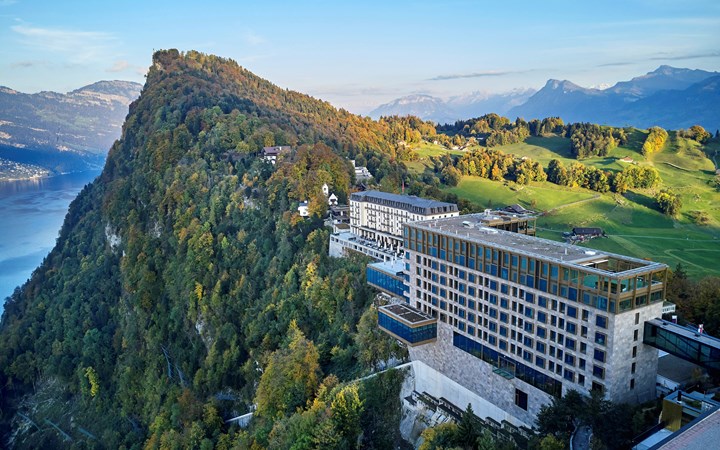
Recognition is catching up too. Michelin handed out its first-ever Wellness Award in October 2025, and the winner wasn't a medical resort bristling with diagnostic hardware. It went to Bürgenstock Resort, a property built into a mountainside above Switzerland's Lake Lucerne. The industry's most conservative arbiter of quality just told you where the bar is, and it isn't in the equipment budget.
What I Keep Seeing Owners Get Wrong
A hotel developer in Asia contracted Luxe Wellness Spaces for a project that was very ambitious and over-scoped. Instead of adding more expensive amenities and equipment, we created a more intentional experience for resort guests. We were highly selective in what services and equipment we would offer, and narrowed it down to a very specific health outcome, combined with softer touches that would impact the overall guest stay. The project costs significantly less than what was initially projected, yet the outcome drove significant returns for the property, not just financially but guest loyalty and profitability.
In my experience, the brief almost always arrives the same way. A developer has seen a competitor's diagnostics suite or a cryotherapy chamber in a trade magazine, and the ask becomes "get us that." Nobody has asked yet what outcome the guest is paying for. That's the conversation that needs to happen before a single square metre gets designed.
Why the Clinic Is the Expensive Mistake
A diagnostics wing, imaging equipment, and clinical staffing is a capital and compliance commitment most luxury properties are not built to carry. It needs licensed practitioners, ongoing certification, liability cover, and enough throughput to justify the spend. Miss any of that and you've built a very expensive room that guests walk past.
Compare that to a recovery circuit: sauna, cold immersion, a quiet lounge, a coach who runs a structured morning session. Lower build cost, lower staffing complexity, and a guest experience that's easier to sell because it's easier to understand. The RLA data shows minor wellness properties, those without heavy clinical infrastructure, posting some of the sharpest year-on-year revenue growth in the whole study. Simplicity isn't the compromise option here. It's the one with the better numbers.
Nature Does the Job the Machines Are Trying to Imitate
Strip away the branding on most longevity technology and you'll find it's simulating something the outdoors already does for free. Cold exposure, light regulation, movement, quiet: a well-designed trail and a well-timed sunrise session deliver the same physiological triggers as a six-figure pod, at a fraction of the CapEx and none of the maintenance contract.
This is why Bürgenstock's win matters more than the Michelin name attached to it. The property that set the new benchmark for wellness hospitality did it with landscape, not lab equipment. Guests don't need to understand biomechanics to trust a mountain. They need to understand it in about four seconds, which is exactly how long good design should take to land.
Where Clinical Infrastructure Earns Its Keep
None of this means diagnostics have no place in hospitality. Medical tourism properties, longevity clinics positioned as destinations in their own right, and ultra-high-net-worth residential wellness all have a legitimate case for clinical build-out, provided the volume and pricing support the overhead.
But that's a different asset class with a different business model, built around a different guest. Most luxury hotels and resorts entering this category are not competing to become a clinic. They're competing to become the property a guest chooses because the stay itself does something. Confusing the two is how a simple, profitable concept turns into an overbuilt one that never earns back its capital.
Building the Program
Before any construction brief goes out, get the commercial logic straight:
Pick one outcome your property can credibly deliver in 48 to 72 hours: sleep, stress recovery, or physical reset. Trying to own all three dilutes the story and the spend.
Map the guest day: not the guest journey. A morning movement habit, a midday recovery ritual, a wind-down routine. If a service doesn't fit one of those three slots, question why it's on the menu.
Audit the existing spa before adding anything new: Most properties already own more of the answer than they realise. The gap is usually structure, not square footage.
Choose one visible measure of progress: a sleep score, a mobility check; so the guest can feel the outcome, not just be told about it.
Prototype before you build. Run the program as a pop-up or a soft-launch package before committing capital to permanent infrastructure.
If you can't answer what outcome you're selling before you've drawn a floor plan, the floor plan is premature.
Where This Leaves You
The category is proven. The money is real, and it's growing faster than general hospitality revenue in most markets. If you're weighing a wellness or longevity concept for a live project and want a second opinion before capital gets committed, that's exactly what a strategy call is for. Luxe Wellness Spaces works with developers and operators across three continents who want clarity before construction. Book a call and let's look at the numbers together.
FAQs
What's the real difference between a wellness hotel and a longevity hotel?
A wellness hotel offers services that make guests feel better during the stay. A longevity hotel structures the stay around a measurable outcome, sleep, stress, or movement, with a simple way to track progress and something to continue after checkout. Neither requires a clinical setting to work.
How do we start without rebuilding the spa from scratch?
Pick one outcome, build a tight protocol around it using what you already have, and test it as a pilot before committing to permanent build-out. Track attach rate and repeat bookings before you scale it.
Is this relevant outside the ultra-luxury tier?
Yes. Michelin's Wellness Award and Key programme are raising guest expectations at every price point, and the RLA data covers major, minor, and no-wellness properties across all hotel classes, not just luxury. The commercial case holds well into upper-upscale and upscale.
Related article: 'Wellness Washing in Hospitality.'
You may also enjoy reading: 'How Wellness Spaces Drive Revenue Through Experience Architecture.'


About The Author
Daryn Berriman is the Founder and Principal Consultant of Luxe Wellness Spaces, a consulting-led studio blending operational expertise and design excellence to create wellness businesses that perform, and spaces that guests love.
Turning wellness concepts into commercial realities.
© Luxe Wellness Spaces 2026. All rights reserved.


Regional Expertise