A common narrative in the fitness industry is that the traditional gym is dying. This is factually incorrect. The mass market gym model is surviving on volume. However, for the premium consumer, the era of the basic gym has ended. It is being replaced by the hybrid wellness club. As operators and developers look to the future, the data is clear. The global health and fitness club market is projected to reach $245 billion by 2032. The highest yield per member is found in the premium, integrated wellness sector. This Executive Briefing outlines the three major drivers forcing this evolution and how smart developers are adapting.
Driver 1: The Longevity Shift
High performers are no longer training just to look good. They are training for lifespan and healthspan. Stewardship of the body and holistic well being have become the primary focus. Metrics like VO2 max, metabolic health, and cognitive preservation are the new standard of success.
Basic facilities offer equipment. Premium wellness clubs offer a sanctuary. Members now expect clinical grade recovery tools, metabolic tracking, and targeted longevity protocols wrapped in luxury hospitality. The active workout floor is now just one piece of a comprehensive lifestyle destination.
Driver 2: The Connection Economy
The modern country club is built around health. While budget gyms are solitary spaces with headphones on, premium clubs are curated communities. Members are seeking spaces where they can network, train, and down regulate with like minded individuals.
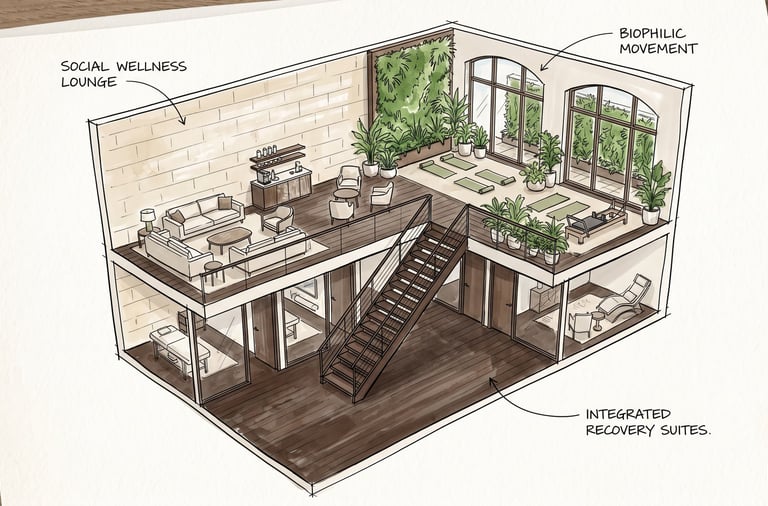
They are paying for the environment and the network, not just the weights. Facility design must reflect this shift by including dedicated social wellness spaces, recovery lounges, and areas that foster authentic human connection.
About The Author
Daryn Berriman founded Luxe Wellness Spaces after 18 years running and advising on wellness operations, from large integrated resorts in the Middle East and the Caribbean to private members' clubs and residential developments. He saw too many wellness facilities designed to impress rather than to perform, and built the firm to help owners and developers get the commercial case right before they build.
Wellness rooted in place, built on less capital.
© Luxe Wellness Spaces 2026. All rights reserved.


Regional Expertise