Are You Building a Wellness Facility or a Wellbeing Asset? The Difference Is Worth Millions.
Are you building a wellness facility or a wellbeing asset? Learn why the built environment is the key to extending guest stays and commanding rate premiums.
Daryn Berriman
5/1/20267 min read
A developer I worked with several years ago made a decision that looked sensible on paper. He had a 120-key boutique resort in the early stages of concept development, a healthy CapEx budget, and a clear brief: build a wellness facility that would justify a premium room rate and attract a discerning international guest.
He delivered on that brief. The spa was beautifully designed, the equipment was current, and the treatment menu was well-considered. On opening day, the facility looked exactly like what it was supposed to be.
Eighteen months later, the wellness revenue was covering roughly 60 percent of its operating cost. Guest utilisation was low outside of treatment bookings. Length of stay had not moved from the pre-opening baseline. The premium room rate was holding, but the wellness facility was not the reason guests were returning.
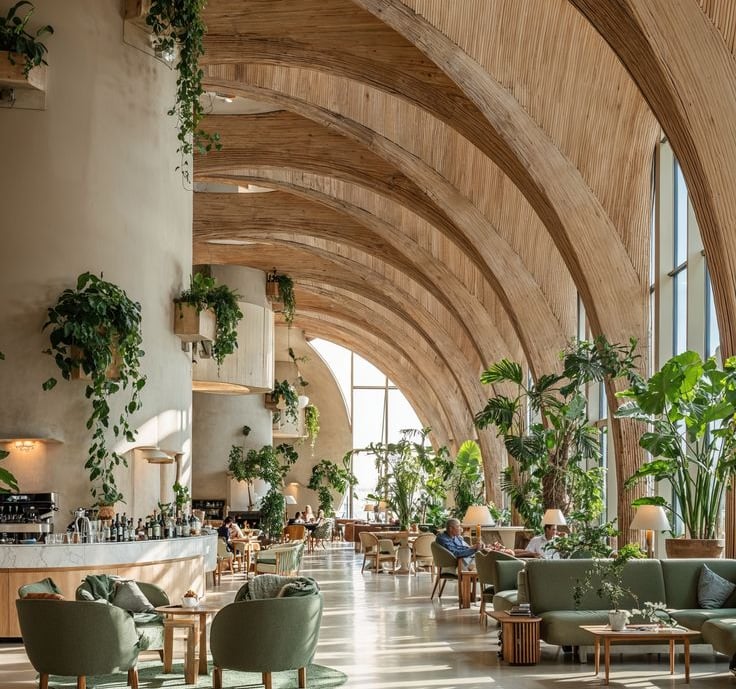
When I was brought in to assess the asset, the problem became clear within the first walkthrough. The spa was excellent. The rest of the property was fighting it. Harsh corridor lighting. A gym sealed off from natural light. Communal areas that generated noise rather than absorbed it. A pool deck that felt exposed rather than restorative. The wellness facility was doing its job. The built environment surrounding it was undoing that work the moment a guest stepped outside the treatment room.
He had built a wellness facility. He had not built a wellbeing asset. And the commercial difference between those two things was significant.
Two Words the Industry Uses Interchangeably, And Should Not
Wellness and wellbeing are not synonyms. In casual conversation, the distinction barely matters. In a development context, it is worth millions.
Wellness is an activity. It is the spa treatment, the gym session, the cold plunge, the nutritional protocol. It requires deliberate effort from the guest. It is practiced, scheduled, and measured. When a developer adds a wellness facility, they are adding a place where guests can actively pursue health improvement. That is valuable. It is also only half the picture.
Wellbeing is a state, and critically it is a state that the built environment either supports or undermines continuously. Circadian lighting that shifts naturally through the day. Acoustic design that reduces ambient stress without guests noticing. Biophilic integration that connects the interior to the landscape outside. Air quality, thermal comfort, spatial proportion. These are not amenities. They are design decisions that determine whether the property's environment works for the guest's physiology or against it, every hour of every day.
The distinction matters commercially for one simple reason. A guest who leaves a treatment room restored and walks into a property that immediately re-stresses them does not associate the restoration with your asset. They associate the stress. The wellness facility produced an outcome that the rest of the property erased. That is a revenue and retention problem disguised as a design oversight.
What the Overlap Produces
The most commercially resilient luxury properties I have worked on are not the ones with the most elaborate wellness facilities. They are the ones where the wellbeing layer is embedded into the entire spatial experience, and the wellness programming sits within an environment that amplifies rather than undermines it.
The commercial outcomes of that integration are measurable and consistent.
Rate premium that holds under pressure. A property that guests describe as "restorative" (without being able to articulate exactly why) commands and retains a rate premium that a facility-led competitor cannot easily replicate. Equipment gets copied. Environment does not.
Length of stay that extends without incentives. When the built environment is genuinely restorative, guests do not feel the pull to leave. They stay an extra night not because of a promotion but because leaving feels like effort. That decision happens at a subconscious level and it is driven entirely by the quality of the environment, not the quality of the spa menu.
Loyalty that precedes the programme. Many hospitality operators try to build loyalty through points systems and marketing. Properties with genuine wellbeing integration build loyalty through memory, the guest who cannot fully explain why they want to return, but knows they do. That kind of loyalty has a lifetime value that no acquisition campaign produces.
The developer I mentioned earlier retrofitted elements of the wellbeing layer in year two. New lighting specifications through the communal areas, acoustic treatment in the corridors and dining spaces, landscaping changes that connected the pool deck to the surrounding environment. The changes were not inexpensive at retrofit stage. They would have cost a fraction of that if they had been in the original brief.
By year three, guest utilisation in the wellness facility had increased by 34 percent. Length of stay had extended by half a day on average. The premium rate had strengthened. None of that came from changing the spa. It came from changing the environment the spa sat within.
Why Most Developments Miss This
The reason most luxury developments invest heavily in wellness and lightly in wellbeing is structural, not negligent. The wellness facility appears on the floor plan. It has a cost, a specification, and a supplier. It is tangible and it is sellable to investors and buyers who need to see what their capital is funding.
Wellbeing design is harder to point to. You cannot put a line item on a budget for acoustic comfort or circadian lighting integration without those decisions feeling abstract to a developer who is managing hundreds of other decisions simultaneously. So they get optimised out, or addressed superficially, or left entirely to an interior designer who was not briefed to think about them.
The other structural problem is the supplier relationship. Most wellness equipment vendors and spa designers are focused on the facility they are being engaged to deliver. They have no commercial incentive to tell a developer that the corridor outside the spa is going to undermine the experience their products are designed to create. An independent consultant who sits on the owner's side of the procurement process does.
Three Questions Worth Asking Before the Design Brief Is Written
If you are in the early stages of a wellness concept (whether new build, repositioning, or asset enhancement), these three questions should be answered before an architect draws a line or a supplier presents a proposal.
Does the well-being layer have its own brief?
Not a design brief, a commercial brief. What specific outcomes does the built environment need to support? Extended length of stay, rate premium, return visit rate, guest satisfaction scores? Those outcomes should drive spatial decisions across the entire property, not just within the wellness facility footprint.
Who is accountable for the environment outside the spa?
In most projects, the spa designer is accountable for the wellness facility. Nobody is explicitly accountable for the acoustic quality of the corridor, the lighting temperature of the lobby at 9pm, or the degree of biophilic connection in the dining space. That accountability gap is where the wellbeing layer gets lost.
What does the guest experience between treatments?
The 45 minutes a guest spends in a treatment room is a small fraction of their stay. The 18 hours they spend outside it determines whether the property feels restorative or merely adequate. Design that question into the brief and the wellbeing layer starts to become an asset rather than an afterthought.
The Commercial Case for Getting This Right Early
The cost differential between designing the wellbeing ecosystem in from the start and retrofitting it after opening is significant. Acoustic treatment specified during construction costs a fraction of what it costs once walls are finished. Lighting design integrated into the electrical specification is a different budget conversation to replacing a lighting system post-opening. Landscape integration planned at the concept stage does not require a pool deck to be partially rebuilt.
The developer who builds the wellbeing layer in from the start is not spending more. They are spending the same capital more intelligently — and producing an asset with stronger rate performance, higher utilisation, and greater long-term value as a result.
Profitable simplicity is not a design philosophy. It is a commercial strategy. The properties that perform best over a ten-year horizon are rarely the most elaborately equipped. They are the most precisely designed for the human experience of being in them.
The Conversation Worth Having
If you are developing a luxury hospitality asset and the wellbeing layer has not yet been addressed in your brief, or if you manage an existing asset where the wellness facility is underperforming relative to the capital committed to it, that is the conversation a strategy session is designed for.
Luxe Wellness Spaces works with developers, owners, and operators at the point where the commercial and spatial decisions intersect. We assess what the asset should be producing, identify where the gaps are, and build a clear framework for closing them — before capital is committed, or after, if the situation requires it.
FAQs
Is well-being design significantly more expensive than a standard wellness facility build?
Not when it is integrated from the start. The cost of biophilic design, acoustic specification, and intelligent lighting is not additive when those decisions are part of the original brief. The expense comes from retrofitting them after construction. A developer who builds the wellbeing layer in from the concept stage is making smarter use of the same capital, not committing more of it.
How do you measure the commercial impact of wellbeing design?
The primary metrics are ADR premium relative to competitive set, length of stay against pre-opening baseline, guest satisfaction scores specifically related to environment and restoration, and return visit rate. Secondary metrics include treatment utilisation outside of peak periods, which tends to increase significantly when the surrounding environment is genuinely restorative. A well-designed wellbeing asset tends to move all of these metrics in the right direction within the first 12 to 18 months of operation. Treating wellness as infrastructure produces a commercially differentiated asset.
Can wellbeing principles be applied to an existing property without a full renovation?
Yes, and this is where the Asset Health Check often uncovers the most immediate opportunities. Lighting adjustments, acoustic interventions, landscape and planting changes, and spatial reprogramming of communal areas can all be implemented without structural change. The impact on guest experience and commercial performance is often faster than owners expect.
Does this apply to urban properties or only resort environments?
The principles apply across property types. The application is different: an urban members club integrates wellbeing through design, air quality, material selection, and spatial programming rather than landscape integration. The commercial outcomes are consistent regardless of context: an environment that supports the guest's physiology produces stronger retention, higher rate tolerance, and better utilisation than one that does not.
At what point in a development should this conversation happen?
As early as possible. The wellbeing brief should be written before the design brief, not after it. The later it enters the process, the more constrained the opportunities become and the more expensive the corrections. If construction has already begun or the asset is already operational, the conversation is still worth having — it simply starts in a different place.
Related article: 'What Your Hotel Wellness Space Actually Costs You — And How to Fix It.'
Explore our Spa & Wellness Consultancy to scope project phases and services.
About The Author
Daryn Berriman is the Founder of Luxe Wellness Spaces, a strategic management consultancy dedicated to the commercial performance of luxury wellness assets. He consults across integrated resorts, private social clubs, premium spas, and bespoke movement spaces.
Turning wellness concepts into commercial realities.
© Luxe Wellness Spaces 2026. All rights reserved.


Regional Expertise