
The Recovery Suite Model: How In-Room Wellness Drives 125% RevPAR Uplift
High-net-worth guests are bypassing communal spas for private recovery suites. We analyze the economics of in-room wellness and the operational pitfalls to avoid.
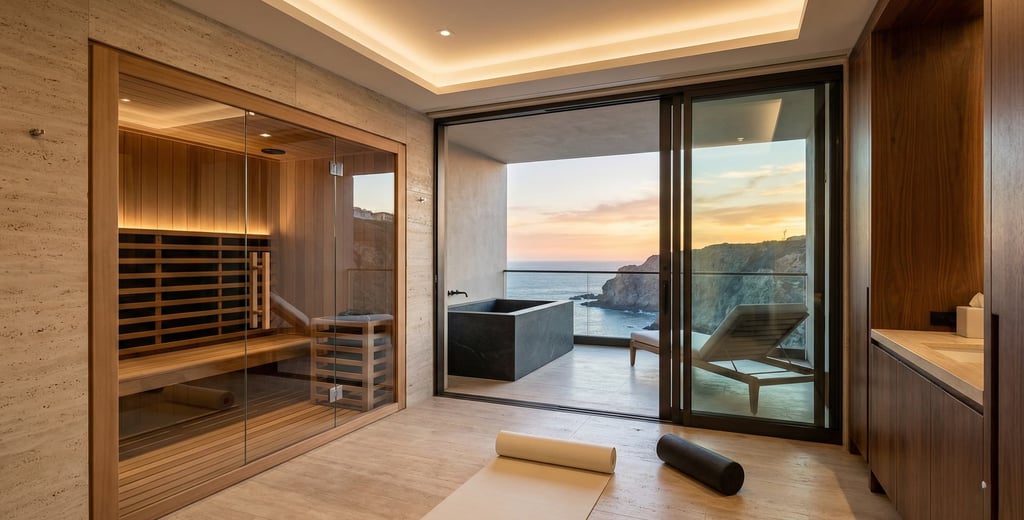
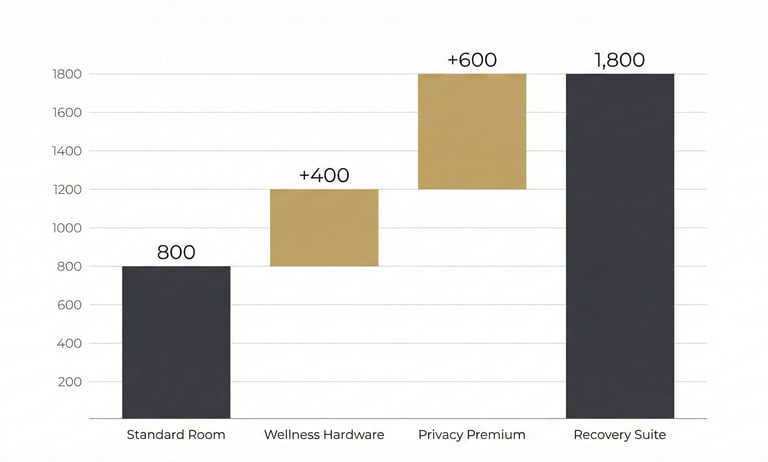
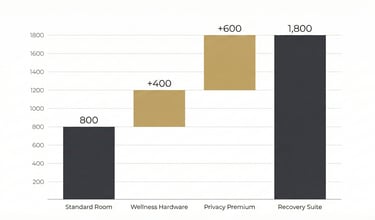
Same square footage. Same view. Same housekeeping cost. 125% Rate Uplift.
This is not a projection. This is actual performance data from a recent project where we converted standard inventory into "Recovery Suites," similar to what we have done with specialist wellness resorts. The result wasn't just a rate increase; the occupancy on these units stabilized at 94%, outperforming every other room category.
At Luxe Wellness Spaces, we are tracking a definitive shift in the market. The era of the "Mediocre Hotel Gym" is over. The ultra-high-net-worth (UHNW) traveler is demanding privacy, and they are willing to pay a premium for it.
The Shift: Privacy is the New Asset Class
The old model of luxury hospitality assumed guests wanted to be seen. The lobby was the runway; the communal spa was the social hub.
Post-pandemic, this has inverted.
Our "Unpopular Opinion" is this: Communal luxury spas are becoming obsolete for the top 1% of travelers.
These guests do not want to wait for a sauna. They do not want to foam roll next to a stranger. They do not want to walk through a public corridor in a robe. They value Control and Exclusivity above all else.
When you move the wellness experience from the public domain to the private suite, you aren't just adding an amenity; you are creating a new, high-margin asset class.
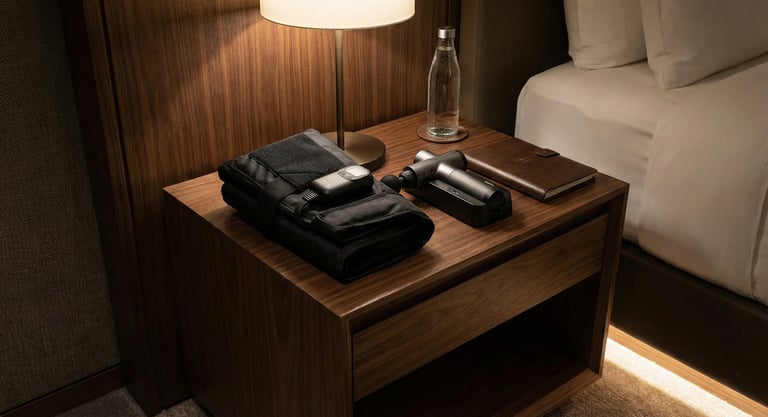
The Operational Trap: Why "DIY" Wellness Suites Fail
The most dangerous thing a General Manager can do is try to retrofit a room without an operational strategy. I have seen properties simply place a Peloton bike in the corner and call it a "Wellness Suite."
This is a liability, not an asset.
When we deploy Luxe Spaces 360 for in-room wellness, we address the invisible infrastructure that prevents failure.
1. The Humidity Crisis
Installing an infrared sauna in a guest bathroom without upgrading the HVAC extraction rates guarantees mold. You are introducing moisture and heat into a space designed for transient use. We engineer airflow patterns to ensure rapid dehumidification, protecting the FF&E (Furniture, Fixtures, and Equipment).
2. The Acoustic Leak
A guest dropping a kettlebell or the hum of a cold plunge motor on a balcony can trigger noise complaints from adjacent rooms. If you don't use impact-absorbing flooring and vibration-dampening mounts, your "Recovery Suite" becomes a nuisance to the rest of the floor.
3. The Maintenance Drag
Consumer-grade equipment cannot survive hospitality usage. A Theragun left in a room will "walk away." A standard cold plunge will have filter issues within weeks. We specify commercial-grade, tamper-proof equipment secured with proper inventory controls.
The Methodology: Building the $1,800 Night
To justify the rate hike, the room must function as a private sanctuary of performance.
The "Recovery Suite" Standard:
The Balcony: A dedicated cold plunge (3-6°C) positioned for privacy but capitalizing on the view.
The Bathroom: A compact, glass-fronted infrared sauna (low EMF) integrated into the joinery. No plumbing required, just dedicated electrical.
The Living Zone: A "Digital Recovery Station" featuring compression boots (e.g., Normatec), red light therapy panels, and a smart fitness mirror.
The Flooring: High-density acoustic rubber underlay topped with antimicrobial woven vinyl (e.g., Bolon) for hygiene and soundproofing.
This isn't decoration. It is Operational Excellence. It transforms a room from a place to sleep into a place to heal.
View our Wellness Design Case Studies
The hotels that win in the next 5 years won't be the ones with the biggest spas. They will be the ones that give guests total control over their wellness journey.
FAQ's
Q: Are in-room wellness suites profitable for hotels?
A: Yes, in-room wellness suites often generate the highest RevPAR (Revenue Per Available Room) on property. Case studies show rate premiums of 100-125% over standard rooms, with occupancy rates stabilizing above 90% due to high demand from privacy-focused travelers.
Q: What equipment is standard for a luxury wellness suite?
A: A true wellness suite should include a cold plunge (ice bath), an infrared sauna, and a recovery station featuring compression boots, percussion therapy devices, and smart fitness mirrors. Essential infrastructure includes acoustic flooring and enhanced HVAC ventilation.
Q: Do wellness suites require special plumbing?
A: Generally, no. Infrared saunas usually require only a dedicated electrical circuit, and modern cold plunges are self-contained units that do not need hard-plumbing, making them efficient retrofits for existing hotel rooms.
Further reading on our blog: Learn 'How Luxury Wellness Spaces Drive Revenue Through Experience Architecture.'
You may also enjoy: Learn why 'Wellness and longevity hotels are surging'. See what guests want now, how to stand out, and how to build outcome-led programs that lift revenue.
About The Author
Daryn Berriman is the Founder and Principal Consultant of Luxe Wellness Spaces, a consulting-led studio blending operational expertise and design excellence to create wellness businesses that perform, and spaces that guests love.
Turning wellness concepts into commercial realities.
© Luxe Wellness Spaces 2026. All rights reserved.