
Why the Most Profitable Fitness Space at Your Resort Is Already Outside
Outdoor fitness isn't a trend. It's a capital decision. I break down why nature-led movement spaces outperform expensive indoor builds on yield, guest satisfaction, and return on invested capital.
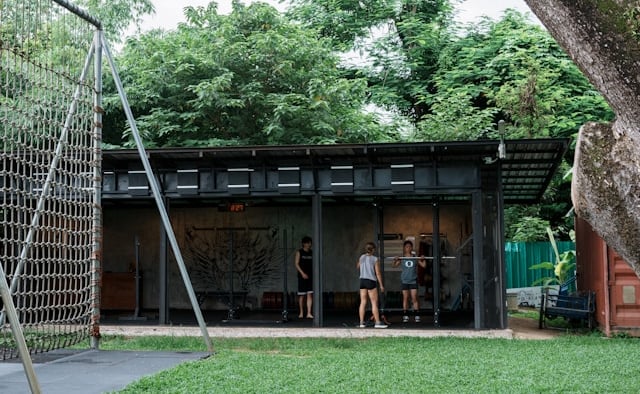
Most developers spend serious capital building a gym that guests use for 40 minutes, on equipment they could find at any hotel in the world, staring at a wall. Then they wonder why their wellness offer isn't moving the needle on RevPAR. The answer is usually sitting right outside the building, unused.
This isn't an aesthetic argument. It's a financial one. Wellness travelers spend approximately 41% more per trip than the average international tourist. That premium doesn't come from installing another row of Technogym treadmills. It comes from designing experiences guests can't replicate at home or at the competitor down the road. Get this wrong and you've built a liability. Get it right and you've created a genuine revenue driver with a fraction of the CapEx.
I've reviewed wellness briefs across three continents where the indoor fitness suite consumed the majority of the wellness CapEx budget, and the outdoor grounds received a couple of benches and some landscaping. Every time, the highest-rated wellness experiences in the guest reviews were things like the morning walk, the ocean swim, or the one yoga class held on the lawn. Properties were spending $800,000 building the wrong thing. The thing guests actually loved cost almost nothing to activate.
That pattern is consistent enough that I now treat it as a diagnostic signal. When a developer tells me their wellness offer isn't performing, I ask them how much sky their guests can see from the fitness space. The answer usually explains everything.
Outdoor Participation Is Not a Post-Pandemic Blip
Outdoor recreation participation reached 175.8 million people in the United States alone in 2023. That is 57% of the population aged six and older. Strava's 2024 Trend Report showed a 59% increase in running club participation. People are not retreating back indoors. The shift toward natural movement environments is structural.
For hospitality operators, that shift has a direct commercial implication. Guests are arriving at your property already oriented toward outdoor activity. If your wellness programming doesn't meet them there, you're losing spend to the trail, the beach, or the city park. You've effectively outsourced your wellness revenue to the landscape.
The Experience Gap Is Wide Open
Here is what the average luxury resort offers: a climate-controlled gym, equipment that gets wiped down between guests, and perhaps a spin class if the timetable is generous. Here is what an outdoor movement environment offers: variable terrain, natural light, fresh air, views, and the kind of physical engagement that actually registers as memorable.
Research published in the Scandinavian Journal of Medicine and Science in Sports confirms that physical activity in natural environments produces measurably better psychological outcomes than equivalent indoor activity. Higher positive affect. Lower anxiety. Better energy. These are the feelings guests attribute to the property, not to the activity itself. That attribution is what drives repeat visits and review scores.
The CapEx Case Is Not Close
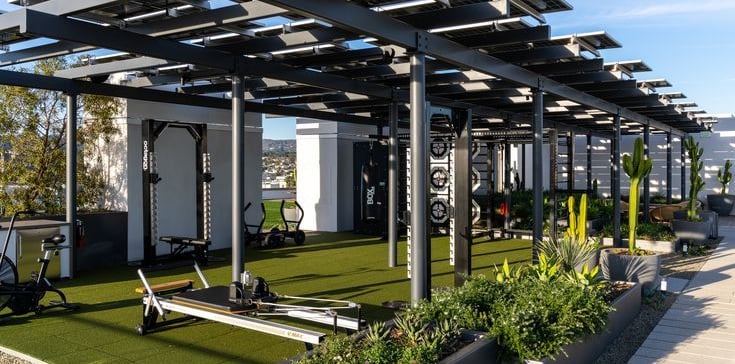
A well-designed outdoor movement and recovery zone, including weatherproof flooring, a calisthenics rig, shade structures, a cold plunge, and a simple outdoor sauna, can be delivered for between $80,000 and $200,000 depending on scope and site conditions. A comparable indoor fitness build, accounting for HVAC, lighting, rubber flooring, equipment, and the structural work required to house it, runs multiples of that figure before you've bought a single piece of kit.
The outdoor build also has a programming advantage. The same space that runs a sunrise strength session can host breathwork at midday and a guided mobility class at sunset. You can't reprogram an equipment room. You can reprogram a well-designed outdoor platform in minutes.
The standard objection is climate. "Our property gets rain. Our guests expect air conditioning. Outdoor programming only works three months a year."
I've heard this in Scotland, in the Maldives, and on the South African coast. It is almost always overstated. Properties that design for climate, rather than designing around it, run outdoor programming year-round. Shade structures, wind management, proper drainage, and radiant heating for cooler months are not complex engineering challenges. They're procurement decisions. The properties using weather as an excuse are usually the ones that didn't plan the space properly to begin with.
There's also a guest expectation argument worth addressing. Some operators assume their clientele wants luxury to mean maximum indoor comfort. In my experience, the opposite is increasingly true at the top end. High-achieving guests spend most of their working lives in controlled, climate-managed environments. What they're paying for when they travel is contrast. Exposure to elements, views, and physical challenge in a setting that feels exclusive. The outdoor environment is the luxury. The glass and steel box is just shelter.
How to Evaluate Your Outdoor Fitness Opportunity
Before spending anything, work through these four questions:
1. What does your guest profile do when they move? Group-led formats or independent training? Strength-focused or recovery-led? The answer determines whether you need a rig and turf or a quieter platform suited to yoga and breathwork. Don't design for the guest you wish you had. Design for the guest you have.
2. What does your site already give you for free? Views, terrain, a water feature, established tree cover, a sunrise orientation. These are assets. A competent designer will build around them rather than competing with them. If your site has a good eastern exposure, that's your morning programming anchor. Use it.
3. What's your programming model? Space without programming is an amenity. Space with consistent, well-branded programming is a revenue line. Decide before you build whether you're running this in-house or through a partnership model. Local run clubs, specialist coaches, and retreat operators are often willing to anchor regular sessions if the space is well-designed and the terms are sensible.
4. What does success look like in numbers? Class fill rates, F&B and retail uplift attached to sessions, guest review sentiment, and repeat visit rate are all measurable. Set the benchmarks before you open the space, not after. Operators who measure tend to program better. Operators who don't tend to let the space drift.
If you're evaluating your wellness offer and want a clear-eyed view of where the real ROI sits before you commit capital, that's exactly what a strategy call is for. Luxe Wellness Spaces works with developers and operators who want the numbers before the build, not after. Book a call and let's look at your site together.
FAQ's
Do outdoor fitness spaces work for five-star properties, or is this better suited to mid-market resorts?
Outdoor movement environments are, if anything, more appropriate at the top end of the market. Exclusive positioning depends on differentiation. A well-designed outdoor training and recovery space with curated programming is far harder to replicate than another premium equipment room. Mid-market operators choose outdoor fitness primarily to reduce CapEx. Luxury operators should choose it because it's a better product.
How do we manage weather disruption to outdoor programming?
Design for your climate from day one. Shade, drainage, wind management, and surface selection are not expensive upgrades. They are basic specification decisions that determine whether your space runs 60% of the year or 95% of the year. Properties that struggle with weather disruption have usually cut corners at the design and materials stage.
Can an outdoor space generate direct revenue, or is it only a guest experience asset?
Both, but the direct revenue requires intentional programming. Sessioned classes with external bookings, day pass access for non-residents, retreat partnerships, and premium add-ons including recovery protocols, guided sessions, and curated nutrition packages can all produce a direct revenue line. The space alone won't generate yield. A programmed space with a clear commercial model will.
We already have an indoor gym. Does adding an outdoor space create redundancy?
Rarely. Guests who train indoors and guests who train outdoors are often different segments, or the same guest on different days depending on energy and preference. The more common outcome is that the outdoor space increases overall wellness engagement across the property rather than cannibalising indoor usage. If your indoor gym is genuinely underutilised, that's a separate problem worth examining before you build anything new.
Further reading on our blog: 'How Luxury Wellness Spaces Drive Revenue Through Experience Architecture.'
About The Author
Daryn Berriman is the Founder and Principal Consultant of Luxe Wellness Spaces, a consulting-led studio blending operational expertise and design excellence to create wellness businesses that perform, and spaces that guests love.
Turning wellness concepts into commercial realities.
© Luxe Wellness Spaces 2026. All rights reserved.


Regional Expertise