Stealth Muscle: The 2026 Functional Fitness Trend Redefining Hotel ROI
Your hotel gym is likely a depreciating asset. Discover why the "Stealth Muscle" trend is forcing a shift from machines to movement—and how to design for ROI.
Daryn Berriman
12/2/20258 min read
The Gym That No One Uses
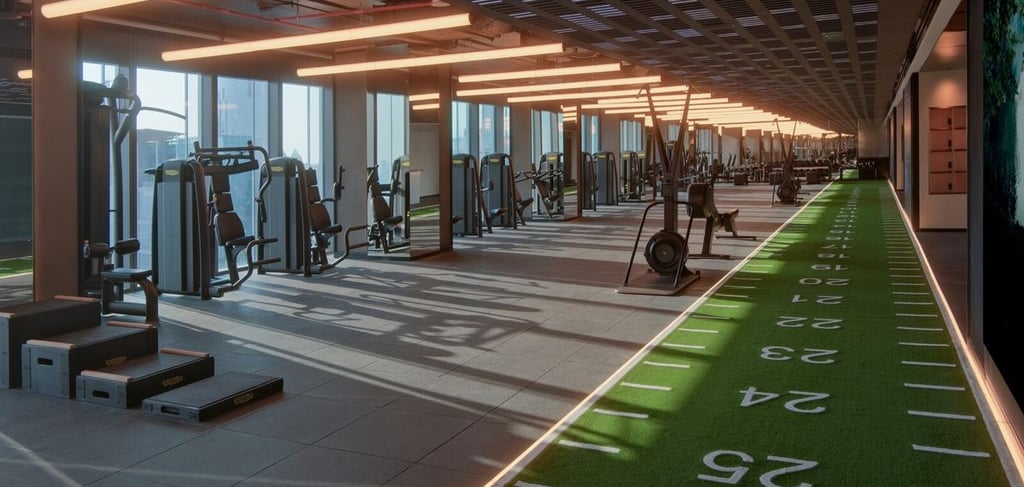
You know the space well. It features floor-to-ceiling mirrors, expensive branded carpet, and rows of gleaming, fixed-weight machines that cost half a million dollars. It looks incredible in the architectural renderings and checks every box for the star-rating inspector. But if you walk in at 7:00 AM, you will notice something unsettling: the expensive chest press machine is empty. The leg extension machine is empty.
Meanwhile, a guest is trying to find a corner of floor space to do a mobility flow, squeezed awkwardly between a dumbbell rack and a water cooler. Another guest is attempting to do a HIIT workout in the aisle of the cardio theater.
This is not just a layout issue; it is a fundamental failure to understand the modern high-performance traveler. You have built a showroom, not a sanctuary. You have designed a facility for 1995, ignoring the massive behavioral shifts driving the $6.3 trillion global wellness economy.
Luxury Hotel Gym Design is Shifting from Machines to Movement
The new standard for luxury hotel gym design prioritizes open, flexible "movement zones" over static, fixed-weight equipment to accommodate the "Stealth Muscle" trend.
Rather than stuffing square footage with single-use machines, forward-thinking operators are creating "Active Wellness Hubs" dedicated to functional fitness, mobility, and recovery. This shift aligns with data showing a massive rise in low-impact training, transforming the gym from a cost center into a retention tool that supports the guest's daily lifestyle.
The market is experiencing a structural shift away from passive relaxation and toward active, data-driven health optimization. Guests are no longer impressed by the quantity of equipment. They are judging you on the continuity of their routine.
Why It Matters: The "Hardware Trap"
For owners and asset managers, the traditional gym model is a financial leak. This is what we call the "Hardware Trap."
A fixed-weight chest press machine is a depreciating asset. It serves one specific function, takes up 15-20 square feet of premium real estate, and sits unused for the vast majority of the day. It cannot be moved. It cannot be repurposed for a yoga class. It cannot be used for a recovery workshop. It is essentially expensive furniture.
In contrast, an open, matted zone is a flexible asset. It is "Stealth Muscle" compliant. It allows for high-yield programming, small group training, and the functional movement patterns that modern executives practice.
The stakes are higher than just wasted floor space. The wellness hospitality market is accelerating, driven by Millennials and Gen Z who now drive 41% of annual wellness spend. These are "Maximalist Optimizers". They are digitally savvy, high-stress, and deeply educated about their physiology.
If your facility cannot accommodate a guest’s functional routine because it is overcrowded with hardware, you are actively breaking their habit loop. When you break a habit, you lose loyalty.
The Phenomenon: What is "Stealth Muscle"?
To understand the design requirement, you must understand the user. Accor Hotels Group identified "Stealth Muscle" as a top trend for 2025.
This concept describes a shift in fitness goals away from pure aesthetics (bodybuilding/hypertrophy) and toward functional fitness (balance, flexibility, and functional strength). The modern luxury traveler is less concerned with bench-pressing 200 pounds and more concerned with longevity, joint health, and metabolic performance.
The data supports this unequivocally. ClassPass reported a 176% rise in low-impact workout bookings (like Pilates) since 2022.
This trend is gender-neutral. We are seeing a significant rise in men participating in Pilates and mobility work. If your gym is designed solely for "pumping iron," you are alienating a massive segment of your high-net-worth demographic.
The Method: Designing the Active Wellness Hub
To pivot from a "showroom" gym to a high-performance wellness hub, we apply a strategic framework that balances commercial constraints with guest experience.
1. The Audit: Usage vs. Square Footage
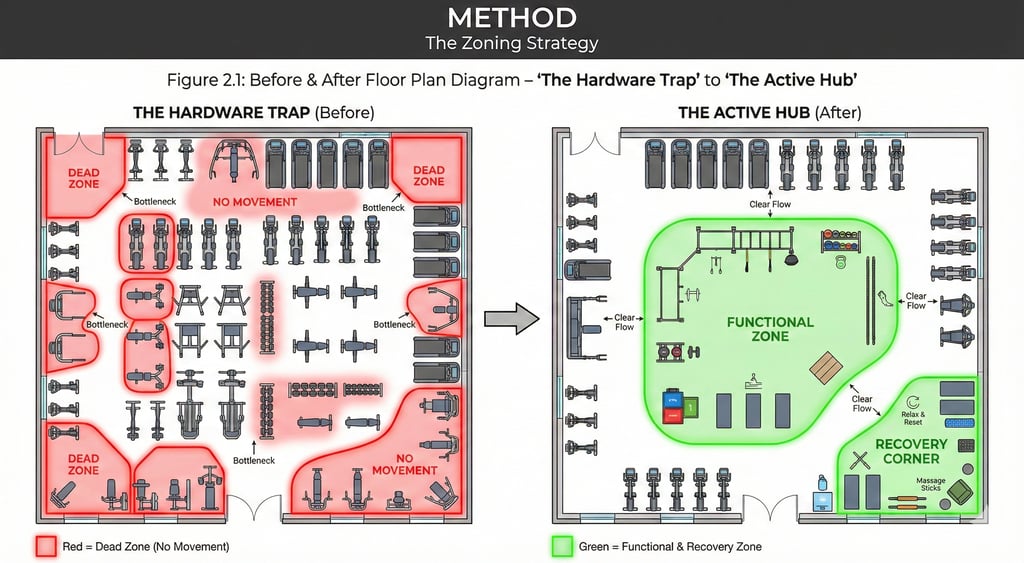
Before you buy a single piece of new equipment, you need to audit your current floor plan. Stop looking at equipment lists and start looking at heat maps.
Identify Dead Zones: Walk your floor at peak hours (6:00 AM – 9:00 AM). Which machines are empty? Typically, these are the selectorized isolation machines (seated bicep curls, leg extensions, chest press).
Calculate Cost Per Square Foot: Determine the footprint of these unused machines. If you have 200 square feet of unused machinery in a property where real estate is valued at $500/sq ft, you are sitting on $100,000 of wasted potential.
2. The Zoning Strategy: Space as the Ultimate Luxury
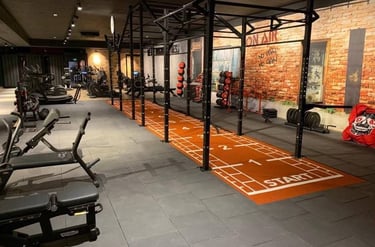
The "Stealth Muscle" traveler demands space. To support this, you must carve out dedicated "Functional Fitness & Mobility Zones". This is not about building an extension; it is about subtraction.
The Removal Phase: We recommend removing at least 30% of cardio and fixed-weight machines. Most hotels over-index on treadmills and ellipticals that sit idle. Consolidate your cardio to the highest-utilized units.
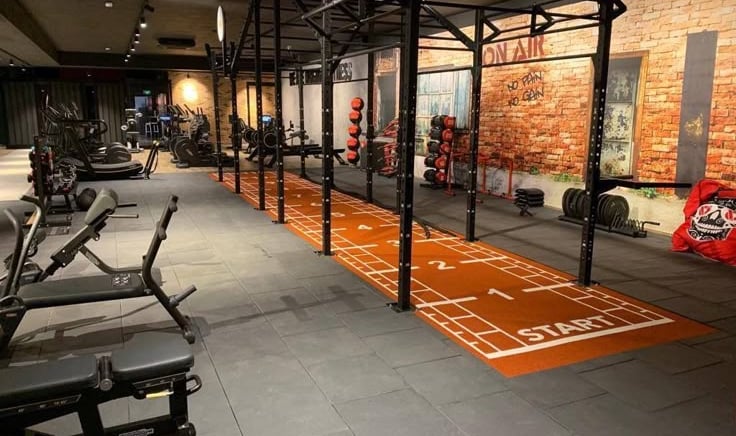
The Installation Phase: Create a "Functional Fitness & Mobility Zone."
Dimensions: Ideally a 15x15 ft open area.
Flooring: Replace carpet or rubber tiles with premium, high-density athletic flooring or wood visuals that allow for barefoot training.
Mirrors: Install full-length mirrors, not for vanity, but for form correction.
Tools: Invest in tactile, high-quality tools like kettlebells, medicine balls, TRX suspension trainers, and plyometric boxes. These tools cost a fraction of a single treadmill but offer hundreds of movement variations.
3. The Integration: Tech & Routine Continuity
The goal is "routine continuity." Your gym should not feel like a break from the guest's life; it should feel like an extension of it. Major global brands are securing this stickiness by partnering with the platforms guests use at home.
Case Study: Hyatt + Peloton: Hyatt Hotels partnered with Peloton to deploy bikes across 700+ properties. This was not just a hardware purchase; it was a strategy to target the loyal Peloton user who refuses to travel where they cannot maintain their "streak."
Case Study: Anantara + Technogym Anantara Hotels launched a global partnership with Technogym to provide exclusive in-room content and co-branded "Athletic Wellness" retreats. This moves the gym experience beyond the basement and into the guest room, validating the "Active Wellness" trend.
The Commercial Model: Turning Space into Revenue
The most powerful argument for the Active Wellness Hub is economic. A traditional gym is a pure cost center. An Active Hub is a potential revenue center.
By clearing the floor of heavy machinery, you create a multi-use venue. This open space can now host:
Small Group Training: Host a morning mobility workshop or a "Stealth Muscle" circuit class. Even at a modest $30/head with 6 guests, you are generating revenue from space that previously generated zero.
Pop-Up Retreats: Partner with a top local fitness instructor (e.g., Pilates or yoga) to host a weekend "Athletic Wellness Escape". You can bundle room nights with classes, creating a high-value revenue product that drives occupancy in shoulder seasons.
Recovery Add-Ons: Use the space to offer guided recovery sessions using percussive therapy (Theragun/Hypervolt) or compression boots (NormaTec). This aligns with the "Quantified Guest" trend where travelers actively seek recovery solutions.
The Costly Mistake Most Operators Make
The most common error we see in luxury developments is the "More is More" fallacy. Developers often believe that "luxury" is defined by the sheer quantity of equipment.
We frequently audit 1,200 sq ft gyms packed with 25 different pieces of machinery. The developer believes they have created a world-class facility. The guest walks in and feels claustrophobic.
The Consequence: The guest skips their workout. They feel physically restricted. The "wellness" experience becomes a stressor. You have spent significant Capital Expenditure (CapEx) to lower your Net Promoter Score (NPS).
Furthermore, hotels often neglect the environment itself. "Stealth Muscle" and longevity training are inherently mindful practices. Placing this zone in a windowless basement with fluorescent lighting kills the experience. Guests are seeking "Active Wellness Escapes" that often involve nature. If you cannot move the gym, you must upgrade the lighting to circadian systems that mimic natural daylight.
The Counter-Intuitive Truth About Gym ROI
You do not need more equipment to increase guest satisfaction; you usually need less.
By removing expensive, bulky machines, you reduce your initial CapEx and long-term maintenance costs while simultaneously increasing the perceived value of the space. An open, sun-drenched room with premium cork yoga mats, a set of leather medicine balls, and a barre feels significantly more "expensive" and exclusive than a crowded room of plastic and chrome.
This is the essence of "Quiet Luxury" in wellness. It is about the luxury of space, the luxury of movement, and the luxury of a facility that respects the human biomechanics rather than forcing them into a seated machine.
Conclusion
The era of the "check-the-box" hotel gym is over. The "Stealth Muscle" demographic demands space, functionality, and intelligent design. This is no longer just an amenity discussion; it is a retention strategy.
Hotels that cling to the old model of "rows of machines" will find themselves obsolete, outpaced by competitors who understand that the modern guest wants to move, breathe, and restore.
Stop building gyms for brochures. Start building Active Wellness Hubs that perform on the P&L.
Is your gym floor generating a return, or is it just gathering dust? Contact Luxe Wellness Spaces today for a functional design audit.
FAQs
Q: What is the "Stealth Muscle" trend in hospitality?
A: "Stealth Muscle" refers to the shift in fitness goals away from pure aesthetics (bodybuilding) toward functional fitness, flexibility, and longevity. Accor identified this as a top trend for 2025, noting that guests now prioritize open space for Pilates and mobility work over heavy weight machines.
Q: How much space should a hotel gym dedicate to functional fitness?
A: We recommend carving out at least a 15x15 ft open, matted zone within your existing footprint. This often requires removing approximately 30% of underutilized cardio or fixed-weight machines to free up the necessary real estate for movement.
Q: Does removing gym equipment negatively impact guest satisfaction?
A: Paradoxically, removing clutter often increases satisfaction. Modern data shows a 176% rise in low-impact workout bookings, indicating that guests value space for movement more than access to specific bodybuilding machines. They prefer a high-quality "Functional Fitness & Mobility Zone" over a cramped room.
Q: How does functional gym design improve hotel ROI?
A: It shifts spending from high-CapEx, depreciating assets (machines) to flexible spaces that can host revenue-generating activities. For example, open spaces allow for "Athletic Wellness Escapes" or pop-up retreats, turning a cost center into a bundled revenue stream.
Q: What are the key partnerships driving this trend?
A: Major brands are validating this shift. Hyatt partnered with Peloton to bring bikes to 700+ properties , and Anantara partnered with Technogym for in-room content and retreats, proving that guests demand routine continuity.
Further reading on our blog: Further reading on our blog: 'Sleep Tourism: The $142B Revenue Opportunity for Hotels'
Explore our Spa & Wellness Consultancy to scope project phases and services.
See how we structure Fitness and Leisure concepts before you commit to equipment.
Learn why Luxe Wellness Spaces blends design, operations, and growth under one roof.
Reference List
Global Wellness Institute – 2024 Global Wellness Economy Monitor
(Source for the $6.3T wellness economy data and real estate market growth)
Accor Group – Top 2025 Wellness Trends Report
(Source for the "Stealth Muscle" definition and "Athletic Wellness Escapes" trend)
ClassPass – 2024 Look Back Report
(Data confirming the massive rise in Pilates and low-impact workout bookings)
McKinsey & Company – The Future of Wellness 2024
(Data on Millennial/Gen Z wellness spend and behavior)
About The Author
Daryn Berriman is the Founder and Principal Consultant of Luxe Wellness Spaces, a consulting-led studio blending operational expertise and design excellence to create wellness businesses that perform, and spaces that guests love.