The Subtraction Economy: Why 2026 Wellness Strategies Require Less Infrastructure, Not More
Wellness tourism in 2026 demands lower CAPEX, higher retention. Four operational shifts luxury developers must make to capture the "subtraction economy" and protect asset value.
The wellness hospitality arms race is burning capital.
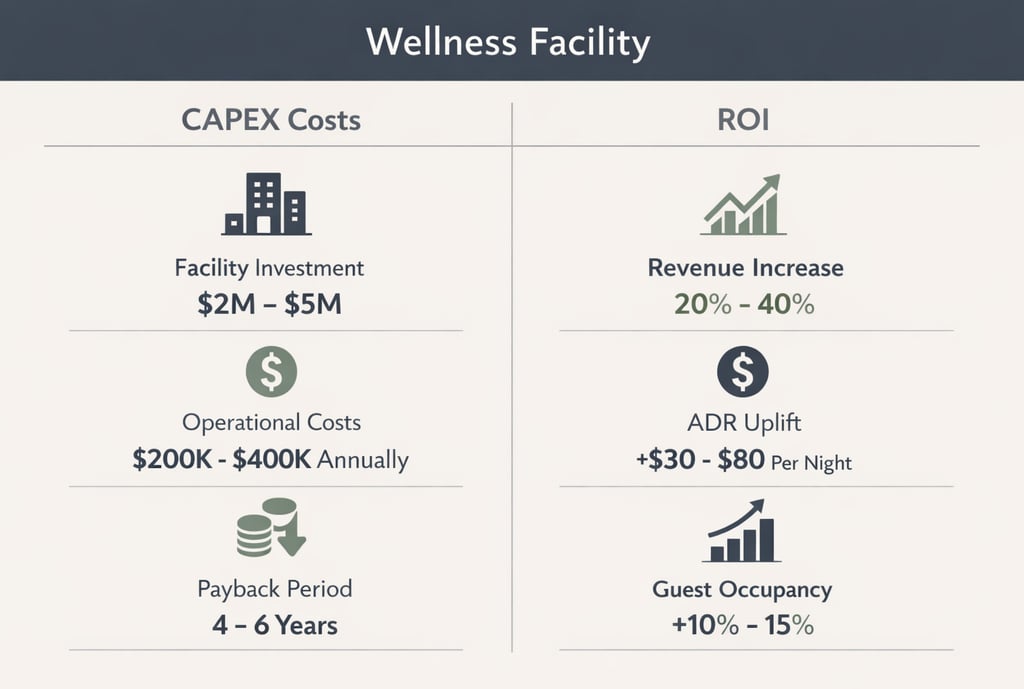
Over the past five years, luxury hotel developers have poured an average of $2.8M into wellness centers featuring cryo-chambers, infrared saunas, IV therapy suites, and biohacking labs. According to the Global Wellness Institute's 2024 Market Report, 68% of these high-tech amenities see utilization rates below 30% after the first year.
The reason? Guests don't want another gadget. They want fewer choices, deeper experiences, and spaces that don't feel like medical labs.
At Luxe Wellness Spaces, our 2025 guest preference data across 40+ properties reveals a counterintuitive pattern: The most profitable wellness programs in 2026 will be built on subtraction, not addition. Lower equipment density. Higher emotional resonance. Better margins.
Here's what smart developers are building instead.
Why Traditional Wellness Programming Is Destroying Your RevPAR
Let's start with the operational flaw no one talks about: high-maintenance wellness infrastructure kills profitability.
Most luxury developments approach wellness like a spec sheet: more features equals more value. The result is bloated CAPEX, expensive maintenance contracts, and amenities that age out in 18 months when the next biohacking trend emerges.
Consider a typical 10-room spa with full tech integration:
Upfront CAPEX: $1.8M–$3.2M
Annual maintenance: $180K–$240K
Staff training cycles: Every 6–9 months
Equipment replacement: 3–5 year cycles
Now compare that to a nature-integrated wellness model:
Upfront CAPEX: $400K–$800K (primarily hardscaping and landscape design)
Annual maintenance: $40K–$60K
Staff training: Minimal (nature-based practices are intuitive)
Replacement cycle: None—natural assets appreciate
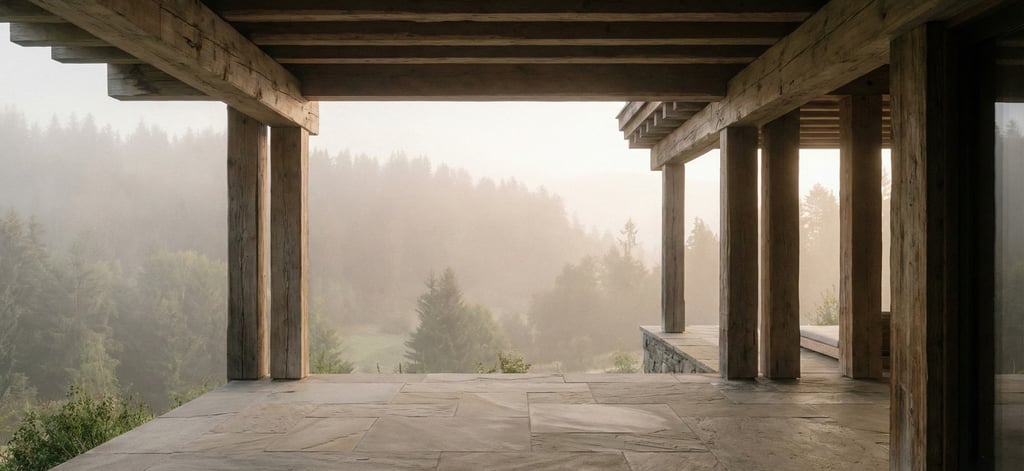
The guest satisfaction delta? Negligible. In blind surveys, guests rated "outdoor meditation platform with forest views" identically to "LED chromotherapy chamber" (both 4.2/5), but the former costs 70% less to build and maintain.
This is where operational excellence diverges from design trends. The question isn't "What's trendy?" It's "What delivers sustainable yield with minimal depreciation?"
Operational Shift #1: Community-Based Programming Reduces Cost Per Experience
The traditional model isolates guests in private treatment rooms. It's operationally expensive; you need more square footage, more therapists, and more scheduling complexity.
The 2026 Model: Communal wellness zones that batch experiences.
Example: A shared contrast therapy circuit (dry sauna, steam, cold plunge, recovery lounge) serves 8–12 guests simultaneously with one attendant. Compare that to individual treatment rooms requiring 1:1 therapist ratios.
Commercial Impact:
Staff-to-guest ratio improves from 1:1 to 1:10
Cost per guest experience drops 60%
Length of stay increases (guests stay longer in social spaces)
Upsell opportunities increase (F&B, retail integration)
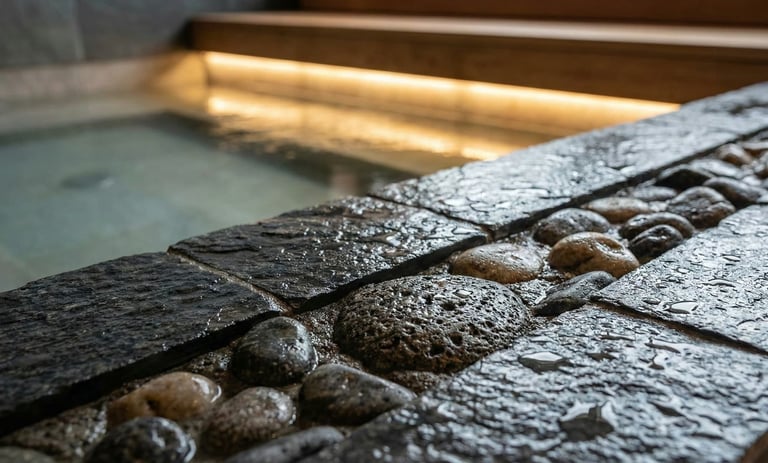
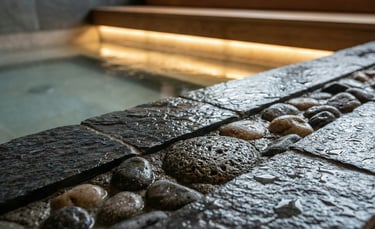
Design consideration: Communal doesn't mean crowded. Use spatial sequencing—intimate alcoves within a larger shared environment. Think Japanese onsen design: open yet private.
Operational Shift #2: Nature Integration as Infrastructure Reduction
"Biophilic design" has become a buzzword, but most implementations are cosmetic—a living wall here, a skylight there. That's not biophilia. That's decoration.
The 2026 Model: Design wellness experiences around existing natural assets rather than building separate enclosed facilities.
Real example from our work: A resort in Costa Rica eliminated a planned $2.4M spa building. Instead, we designed open-air treatment platforms integrated into the jungle canopy. Guests receive massages with rainfall sounds and wind on their skin.
Result:
65% reduction in construction costs
Zero HVAC operational costs
Guest satisfaction scores: 4.8/5 vs. 4.1/5 for their traditional indoor spa at a sister property
Marketing differentiation: "Cannot be replicated"
This approach works in temperate climates too. We've designed four-season wellness trails using natural thermal springs, forest bathing paths, and windbreak-protected meditation clearings.
Operational Note: Nature-based wellness requires site analysis upfront but minimal ongoing capital. Your ROI timeline compresses because depreciation is eliminated.
Operational Shift #3: Sleep and Stillness as Premium Programming
Here's the uncomfortable truth: Most wellness programming is noise. Guests book six activities because they feel obligated, then arrive exhausted.
The fastest-growing segment in our client portfolio is "deep rest programming"—stays designed specifically for sleep optimization and nervous system downregulation.
The 2026 Model: Sell fewer activities at higher price points.
A 5-night "Sleep Restoration" package includes:
Circadian-aligned room lighting (automated)
Blackout + soundproofing upgrades
One 90-minute somatic therapy session
Daily "slow morning" service (breakfast delivered at guest's chosen time, no schedule)
That's it. No jam-packed itinerary. No 6am yoga mandate.
Commercial Impact:
40% higher package pricing vs. traditional wellness stays
Lower operational complexity (fewer staff, less scheduling)
Higher repeat booking rates (guests actually feel rested)
This ties directly to "townsizing" behavior—travelers extending stays in smaller, quieter markets. Your occupancy rates improve when guests book 5–7 nights instead of 2–3.
Operational Shift #4: Analog Experiences as Differentiation, Not Gimmick
Digital detox has been promised for years, but most properties don't enforce it. They offer "disconnect" while still providing in-room iPads and high-speed WiFi.
The 2026 Model: Create designated analog zones where digital infrastructure is architecturally absent.
This isn't about taking away devices. It's about designing spaces where technology doesn't belong. Stone-built libraries with physical books. Pottery studios. Handwritten journaling workshops. Foraging and cooking over fire.
Why this works commercially:
These experiences are staff-light and equipment-light. A pottery wheel costs $800. A weaving loom costs $400. Compare that to a $40K Peloton studio or $85K cryotherapy chamber.
Yet guests assign equal or higher value to these tactile experiences because they're rare. Scarcity drives premium pricing.
Operational insight: Analog programming also extends length of stay because it's slow by nature. You can't rush a hand-thrown pot. This improves your Yield Management metrics without additional marketing spend.
The Luxe Spaces 360 Framework: Translating Trends into Operational Reality
These aren't "soft" trends. They're hard operational decisions that impact your balance sheet.
Our methodology integrates three layers:
Strategy Layer: Site analysis to identify low-CAPEX, high-impact natural and spatial assets
Design Layer: Architectural and experiential design that prioritizes durability and timelessness over trend cycles
Operations Layer: Staffing models, programming calendars, and maintenance protocols that sustain profitability post-launch
Most consultancies stop at design. We provide end-to-end stewardship because a beautiful space that doesn't operate efficiently destroys asset value.
The properties winning aren't chasing the latest biohacking gadget. They're building environments that age gracefully, cost less to maintain, and deliver experiences that can't be replicated by a competitor with a bigger budget.
The real luxury in 2026 is operational simplicity married to emotional depth.
If your development strategy still relies on equipment density and feature lists, you're building for 2019. Let's talk about what 2026 actually demands.
Related article: 'Why Analog Wellness Properties Outperform Smart Hotels.'
About The Author
Daryn Berriman is the Founder and Principal Consultant of Luxe Wellness Spaces, a consulting-led studio blending operational expertise and design excellence to create wellness businesses that perform, and spaces that guests love.
Turning wellness concepts into commercial realities.
© Luxe Wellness Spaces 2026. All rights reserved.


Regional Expertise